

 Architecture
Singapore is famous for its futuristic skyline, shopping malls, food scene, and lush gardens, but the city-state also offers an impressive cultural experience. Its museums, galleries, heritage centres, and historic neighbourhoods reveal the stories of Singapore’s multicultural communities and its transformation from a trading port into a modern global city.
From the National Museum of Singapore and Asian Civilisations Museum to the colourful streets of Little India and Kampong Gelam, there are plenty of places to discover Singapore’s history, art, traditions, and contemporary culture.
1. National Museum of Singapore
The National Museum of Singapore is an excellent starting point for understanding the country’s history. Established in the 19th century, it explores Singapore’s development through historical objects, photographs, multimedia presentations, and immersive exhibitions.
The museum covers important periods in Singapore’s history, from its early development and colonial era to the Japanese Occupation, post-war years, and independence. It is particularly suitable for first-time visitors who want an introduction to the country beyond its modern attractions.
Best for: History, families, first-time visitors, and cultural exploration.
2. Asian Civilisations Museum
Located beside the Singapore River, the Asian Civilisations Museum provides a fascinating look at the cultures and artistic traditions that have influenced Singapore and the wider region.
Its galleries explore collections connected with China, Southeast Asia, South Asia, and West Asia. With more than 1,300 artefacts across its galleries, the museum offers an opportunity to understand the connections between different Asian civilizations.
The museum’s location also makes it easy to combine a cultural visit with a walk along the Singapore River and the Civic District.
Best for: Asian history, art, architecture, and cultural heritage.
3. National Gallery Singapore
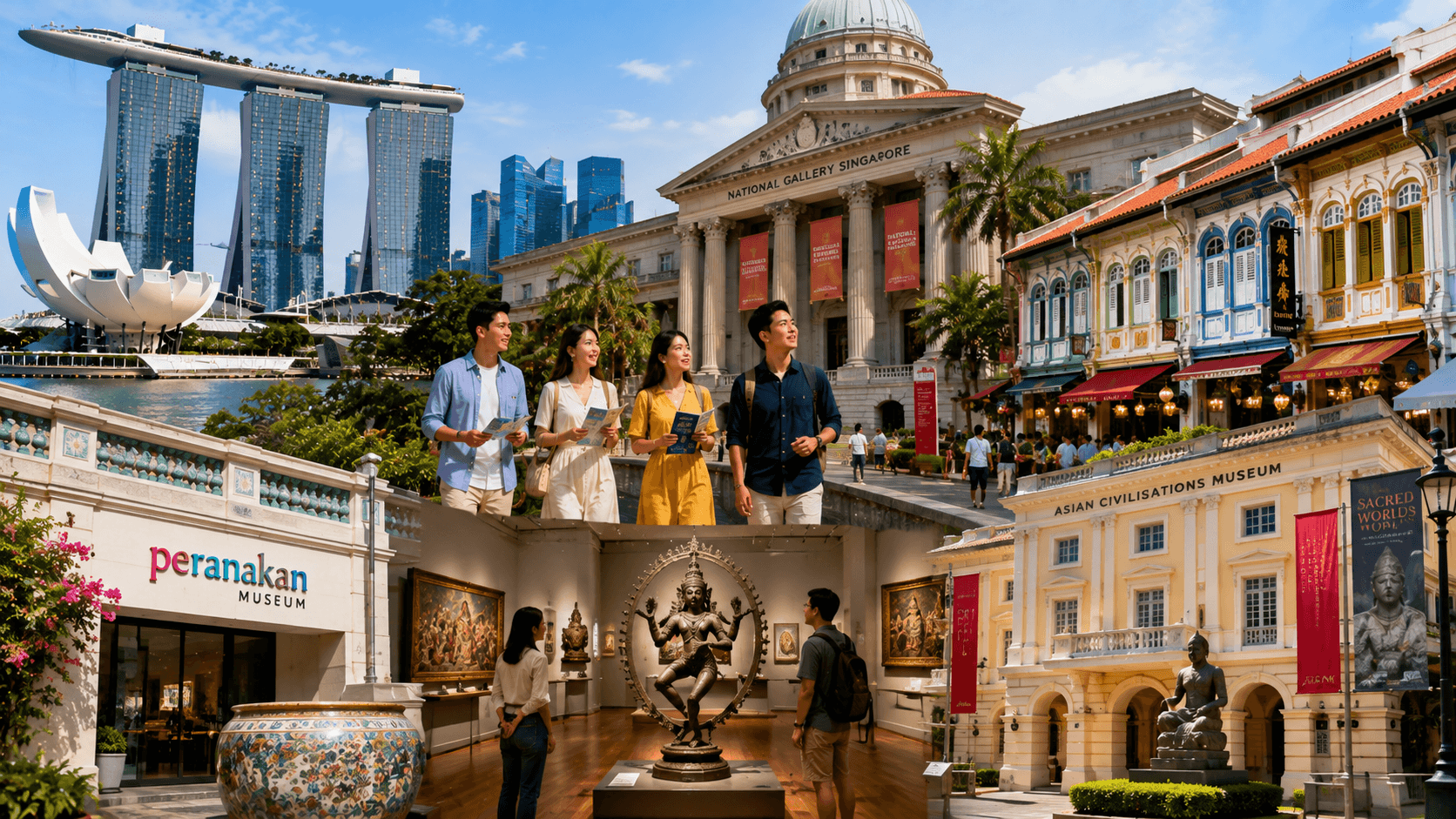
Art lovers should make time for National Gallery Singapore, one of the city’s most important art institutions. Housed in the former Supreme Court and City Hall buildings, the gallery combines historic architecture with extensive collections of Southeast Asian art.
Its exhibitions explore the development of modern and contemporary art across Singapore and Southeast Asia. The building itself is also an attraction, offering impressive architectural details and views of the surrounding Civic District.
Best for: Art enthusiasts, architecture lovers, photographers, and cultural travellers.
4. Peranakan Museum
Singapore’s Peranakan heritage is one of the most distinctive parts of its cultural identity. The Peranakan Museum introduces visitors to the traditions, lifestyle, craftsmanship, and history of Peranakan communities in Singapore and Southeast Asia.
Expect to see colourful textiles, jewellery, ceramics, furniture, decorative objects, and other examples of Peranakan culture. The museum is especially valuable for travellers interested in understanding how different Asian cultural influences came together in the region.
Best for: Cultural heritage, traditional crafts, design, and photography.
5. ArtScience Museum
For a more contemporary experience, visit the ArtScience Museum at Marina Bay Sands. Its distinctive lotus-inspired architecture has become one of Singapore’s most recognisable landmarks.
The museum brings together art, science, technology, and design through exhibitions and immersive experiences. It is a particularly appealing choice for families and visitors who enjoy interactive and visually engaging attractions.
Best for: Families, technology enthusiasts, interactive exhibitions, and modern culture.
6. Singapore Art Museum
The Singapore Art Museum (SAM) focuses on contemporary art from Singapore, Southeast Asia, and beyond. It is a good choice for travellers who want to explore the region’s modern creative scene rather than only traditional history and heritage.
The museum’s programmes and exhibitions provide opportunities to discover new artists, contemporary ideas, and different artistic perspectives.
Best for: Contemporary art and creative culture.
7. Indian Heritage Centre
Located in the Little India area, the Indian Heritage Centre explores the history and contributions of Indian communities in Singapore and Southeast Asia.
Its exhibitions help visitors understand the longstanding connections between India and Singapore through migration, trade, religion, culture, and community life. A visit can easily be combined with exploring Little India’s temples, shops, restaurants, and colourful streets.
Best for: Indian heritage, history, architecture, and neighbourhood exploration.
8. Malay Heritage Centre and Kampong Gelam
Kampong Gelam is one of Singapore’s most culturally distinctive neighbourhoods. The area is associated with Malay, Arab, and Muslim heritage and is known for landmarks such as the Sultan Mosque, traditional shophouses, independent boutiques, cafés, and restaurants.
The Malay Heritage Centre adds historical context to the neighbourhood, helping visitors learn more about the Malay community and Kampong Gelam’s role in Singapore’s development. Singapore’s tourism board also highlights Kampong Gelam as an important destination for history, living traditions, food, and shopping.
Best for: Heritage walks, architecture, culture, food, and photography.
9. Chinatown Heritage
Chinatown is another excellent place to experience Singapore’s multicultural heritage. Its temples, traditional shophouses, markets, food centres, and cultural attractions provide a glimpse into the experiences of the Chinese community.
Rather than visiting a museum alone, travellers can explore the neighbourhood on foot and combine historical attractions with local food and shopping.
Best for: Chinese heritage, street photography, food, temples, and walking tours.
10. Little India
Little India offers a lively combination of history, religion, food, shopping, and architecture. Colourful buildings, Hindu temples, Indian restaurants, spice shops, jewellery stores, and traditional businesses create a distinctive atmosphere.
The neighbourhood is particularly enjoyable when explored slowly on foot. Visitors can combine a visit to the Indian Heritage Centre with nearby cultural landmarks and local eateries.
Best for: Food lovers, cultural travellers, architecture, shopping, and photography.
11. Kampong Glam
Kampong Glam is another neighbourhood where Singapore’s history remains visible in everyday life. Its combination of heritage buildings, contemporary cafés, boutiques, street art, and religious landmarks creates an interesting contrast between old and new Singapore.
The area around Sultan Mosque and Haji Lane is particularly popular with visitors looking for cultural experiences and colourful photographs.
Best for: Architecture, shopping, street art, cafés, and cultural walks.
12. Changi Chapel and Museum
For travellers interested in Singapore’s wartime history, the Changi Chapel and Museum provides an important and more reflective experience.
The museum focuses on the experiences of prisoners of war and civilians during the Japanese Occupation of Singapore during the Second World War. It offers historical context through personal stories, photographs, documents, and artefacts. The museum is included among Singapore’s national heritage institutions.
Best for: History, wartime heritage, and educational visits.
13. Lee Kong Chian Natural History Museum
Not every cultural attraction in Singapore is focused on human history. The Lee Kong Chian Natural History Museum explores biodiversity, natural history, and scientific research, with a particular emphasis on Singapore and Southeast Asia.
It is a good choice for families, students, and travellers who enjoy natural science and the region’s wildlife heritage.
Best for: Families, nature lovers, biodiversity, and science.
14. Singapore’s Historic Civic District
The Civic District is ideal for travellers who want to combine museums with architecture and history. The area contains several important institutions and historic buildings, making it possible to explore Singapore’s cultural heritage largely on foot.
A cultural day here can include the National Museum, National Gallery Singapore, Asian Civilisations Museum, historic civic buildings, and a walk along the Singapore River.
Best for: First-time visitors, history lovers, architecture enthusiasts, and walking tours.
15. Singapore’s Heritage Neighbourhoods
Some of the best cultural experiences in Singapore happen outside traditional museums. Neighbourhoods such as Chinatown, Little India, Katong-Joo Chiat, and Kampong Gelam allow visitors to see living traditions through food, architecture, festivals, religious sites, local businesses, and everyday community life. Singapore’s tourism board specifically highlights these neighbourhoods as important parts of the country’s culture and heritage.
Katong-Joo Chiat is particularly interesting for travellers who want to discover Peranakan architecture, colourful shophouses, cafés, and local food.
Best Museums in Singapore by Interest
| Interest | Recommended Place |
|---|---|
| Singapore history | National Museum of Singapore |
| Asian culture | Asian Civilisations Museum |
| Southeast Asian art | National Gallery Singapore |
| Peranakan culture | Peranakan Museum |
| Modern art and technology | ArtScience Museum |
| Contemporary art | Singapore Art Museum |
| Indian heritage | Indian Heritage Centre |
| Malay heritage | Malay Heritage Centre |
| Chinese heritage | Chinatown |
| Wartime history | Changi Chapel and Museum |
| Natural history | Lee Kong Chian Natural History Museum |
| Cultural neighbourhoods | Little India, Kampong Gelam & Katong-Joo Chiat |
Tips for Exploring Singapore’s Museums and Cultural Attractions
Plan around your interests: Singapore has museums covering history, art, science, design, natural history, and different cultural communities, so choose attractions that match your interests.
Combine museums with neighbourhood walks: A museum visit becomes even more rewarding when paired with the surrounding heritage district. For example, explore the Asian Civilisations Museum and Singapore River, or visit the Indian Heritage Centre before exploring Little India.
Check exhibition schedules: Temporary exhibitions can change throughout the year. Check the official museum website before visiting if you have a particular exhibition in mind.
Allow enough time: Major museums can take several hours to explore properly. Avoid packing too many museums into a single afternoon.
Look for free admission opportunities: Singapore Citizens and Permanent Residents receive free admission to National Heritage Board national museums and heritage institutions, although some special exhibitions may have separate charges.
A Perfect Cultural Day in Singapore
For a full day of history and culture, start at the National Museum of Singapore in the morning. Continue towards the Civic District and visit National Gallery Singapore before enjoying lunch nearby.
In the afternoon, head towards the Singapore River and explore the Asian Civilisations Museum. Later, take a heritage walk through Chinatown or Kampong Gelam and finish the day with a local dinner.
If you prefer a more modern experience, replace one of the history museums with ArtScience Museum and explore the Marina Bay area afterward.
Final Thoughts
Singapore’s museums and cultural attractions reveal a side of the city that can easily be missed when focusing only on skyscrapers, shopping, and entertainment. Its museums preserve stories of migration, trade, art, religion, community, and national development, while its historic neighbourhoods continue to showcase living traditions.
Whether you are fascinated by Southeast Asian art, interested in Singapore’s history, curious about Peranakan culture, or simply looking for an enriching indoor activity, Singapore offers a remarkable range of cultural experiences. Exploring these museums and heritage districts is one of the best ways to understand the many influences that have shaped modern Singapore.
Quick Takeaway
Top picks for first-time visitors: National Museum of Singapore, Asian Civilisations Museum, National Gallery Singapore, Peranakan Museum, and ArtScience Museum.
For neighbourhood culture: Chinatown, Little India, Kampong Gelam, and Katong-Joo Chiat.
For families: ArtScience Museum and Lee Kong Chian Natural History Museum.
For history enthusiasts: National Museum of Singapore and Changi Chapel and Museum.


Comments are closed